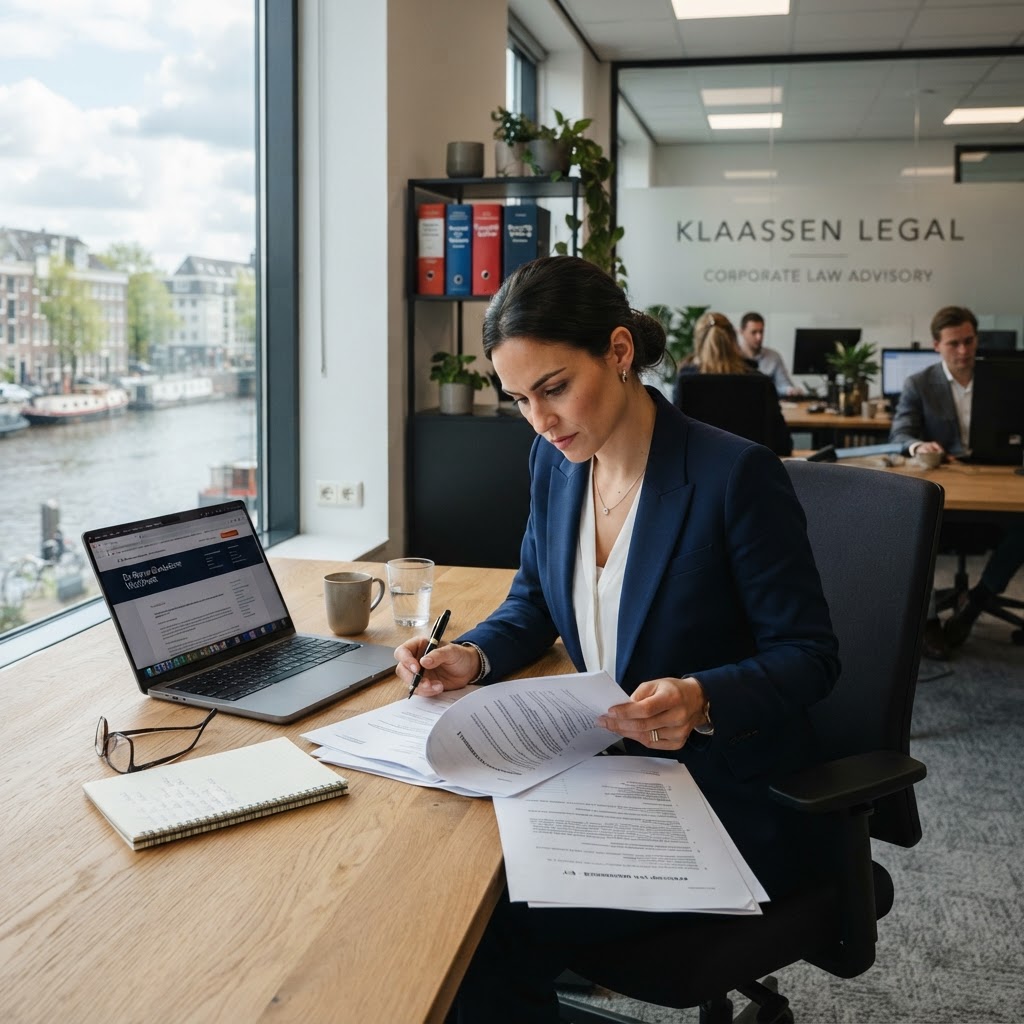
Why is a director's personal liability the exception?
As a director of a Dutch B.V., you generally operate under the protection of the corporate veil. This legal construction ensures that the company, as a separate legal entity, is liable for its own debts and obligations. Your personal assets remain shielded from creditors, which is a cornerstone of entrepreneurial freedom in the Netherlands. This legal protection is subject to exceptions where a director may be held personally liable.
However, this shield is not an absolute guarantee against personal financial consequences. If you fail to act with the care required of a professional director, the law allows for exceptions where your personal immunity is lifted. Understanding the boundary between legitimate business risk and actionable misconduct is essential for every board member.
When does improper performance arise?
Improper performance of duties refers to management behaviour that falls significantly below the standard expected of a reasonably competent director. It is not enough for a business decision to simply turn out poorly or for the company to suffer a loss. Courts recognise that business involves inherent risks, and you must have the freedom to make choices that may not always succeed.
For liability to arise, your conduct must typically be described as 'evidently improper'. This implies that no reasonable director, placed in the same circumstances with the same information, would have taken the same path. Serious mismanagement is the litmus test that determines whether you have crossed the line from a difficult business period into personal legal territory, as illustrated by cases in which directors were held liable for passively allowing a loss-making group structure to continue.
The three forms of directors' liability briefly explained
There are three distinct ways in which you might face a claim. Firstly, there is internal directors’ liability, which occurs when the company itself holds you accountable for failing to fulfil your duties properly. This is usually triggered by a breach of the articles of association or statutory duties.
Secondly, you may face external directors’ liability: personal claims by creditors. This happens when a third party, such as a supplier or business partner, sues you personally for damages caused by your decisions. Finally, in the event of a bankruptcy, the insolvency trustee may hold you accountable for the deficit if you failed to manage the company with due care, for example, if you failed to file the annual accounts.
How high is the threshold in practice?
In Dutch legal practice, the threshold for personal liability is deliberately set high to protect the entrepreneurial spirit. You are permitted to make mistakes and take calculated risks, provided that you have followed the correct procedures and documented your decision-making process. The court does not judge your actions with the benefit of hindsight; it evaluates whether your management was defensible at the time the decision was made. Courts assess these situations by considering the circumstances and the director’s conduct at the time.
Notable precedents, such as ECLI:NL:HR:2015:522, illustrate that personal liability requires a significant degree of blame. If you can demonstrate that you acted in the interest of the company, relied on professional advice, and considered the risks involved, your position remains strong. However, if you ignore obvious red flags or fail to maintain proper accounts, the court is much more likely to rule against you. Be aware that risks of personal liability remain even when a company is dissolved through turbo liquidation.
Key points at a glance
- The B.V. structure provides a protective shield, but it is not a permit for reckless behaviour.
- Personal liability only arises in cases of serious, evidently improper management.
- Always document your key business decisions to demonstrate your rationale if challenged.
- Ensure your administrative and accounting duties are always up to date.
- Take the interests of creditors into account, especially if the company faces financial distress.
- Distinguish clearly between internal company accountability and claims from external creditors.
- Liability risks increase significantly when the company approaches insolvency, particularly for those involved in complex corporate structures.
- Consider obtaining directors and officers (D&O) liability insurance for additional protection.
What should you do now?
Assessing your specific liability risk requires an objective look at your company's governance and financial status. Do not wait for a formal claim to appear before reviewing your decision-making processes and internal controls. If you are concerned about your exposure or are facing potential disputes, it is vital to engage a corporate law lawyer at an early stage to mitigate risks and prepare your defence strategy effectively.
Questions about directors' liability?
Mr. Vincent Besters is happy to help. Contact us for a no-obligation first consultation.
Get in touch →
Do you have legal questions following this ruling?
Mr. Vincent Besters is happy to help. Contact us for a no-obligation first consultation.
Get in touch →