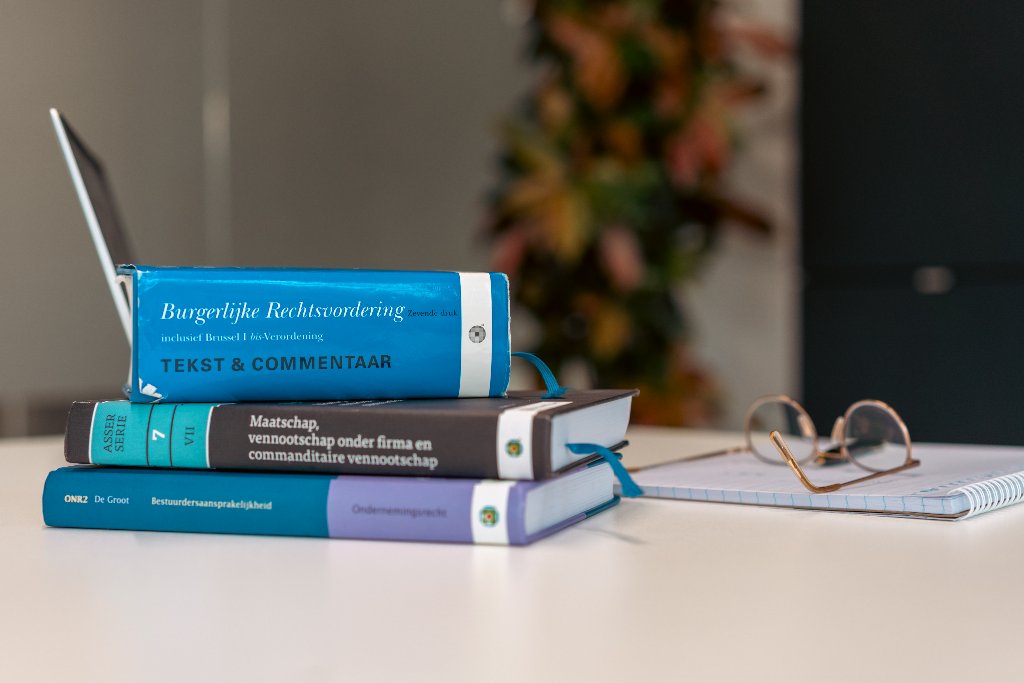
Mr. Vincent Besters represented the interested parties in inquiry proceedings before the Enterprise Chamber
On 1 March 2018, the Enterprise Chamber of the Amsterdam Court of Appeal issued a judgment in inquiry proceedings in which mr. V.M. Besters acted as counsel for the interested parties — two of the three shareholders and directors of Trinity Investment Group B.V. and Opwerk Uitzendbureau B.V. The third shareholder's request to order an inquiry was rejected.
What was the case about?
Trinity Investment Group B.V. had been founded in 2014 by three shareholders (each holding 33.3%), each through their personal holding company. Trinity was the sole director of Opwerk Uitzendbureau B.V., which was active in placing people with a distance to the labour market at companies in The Hague.
By 2017 the cooperation had broken down severely. One of the three shareholders ([A]) filed a petition with the Enterprise Chamber seeking:
- An inquiry (enquête) into the policy and conduct of Trinity and Opwerk;
- As an immediate measure, the suspension of the other two directors and the appointment of a third.
[A] accused the other two shareholders (Mr. Besters' clients) of, among other things:
- Removing company assets (inventory, bookkeeping) and diverting client relationships;
- Setting up a competing company (Vandaag Talent B.V.) during the separation negotiations;
- Excluding [A] from decision-making regarding a municipal cooperation project;
- Terminating her management agreement.
The interested parties ([B] c.s.), represented by mr. Besters, argued that [A] herself had committed irregularities (private withdrawals of approximately €12,700 from the company account) and that the separation discussions were proceeding in good consultation.
What did the Enterprise Chamber decide?
The Enterprise Chamber rejected the inquiry request:
- No justified grounds for doubt. Although the relationship between the shareholders was severely disrupted, the Enterprise Chamber held that the conduct of [B] c.s. — however unpleasant for [A] — did not give rise to justified reasons to doubt the correctness of Trinity's and Opwerk's management.
- Board decisions were valid. The majority decision to terminate [A]'s management agreement was taken by authorised directors and could not justify an inquiry.
- Incorporation of a competing company. The Enterprise Chamber took note of the incorporation of Vandaag Talent but found this insufficient to order an inquiry.
- Request for immediate measures also rejected. Since no inquiry was ordered, there was no basis for the requested suspension of the other directors.
What does this mean for entrepreneurs?
This ruling provides valuable lessons for shareholders in private limited companies:
- A conflict between shareholders does not in itself justify an inquiry. The Enterprise Chamber will only order an investigation if there are concrete indications that the company's management itself is deficient — not merely because shareholders are in dispute.
- The inquiry threshold is high. Disrupted relations, disagreement over strategy, or a shareholder falling-out are insufficient to establish justified doubt within the meaning of Article 2:350 of the Dutch Civil Code.
- Minority shareholders must act in time. Anyone suspecting that co-shareholders are hollowing out the company or diverting clients should seek legal advice promptly and, if necessary, request emergency relief.
- Decisions on management agreements. Terminating a management agreement by a majority resolution of director-shareholders is a powerful but sensitive instrument that can lead to legal conflict.
Case Reference
This post is based on ECLI:NL:GHAMS:2018:725.
Mr. V.M. Besters acted as counsel for the interested parties ([B] c.s.) in this case.
Do you have legal questions following this ruling?
Mr. Vincent Besters is happy to help. Contact us for a no-obligation first consultation.
Get in touch →