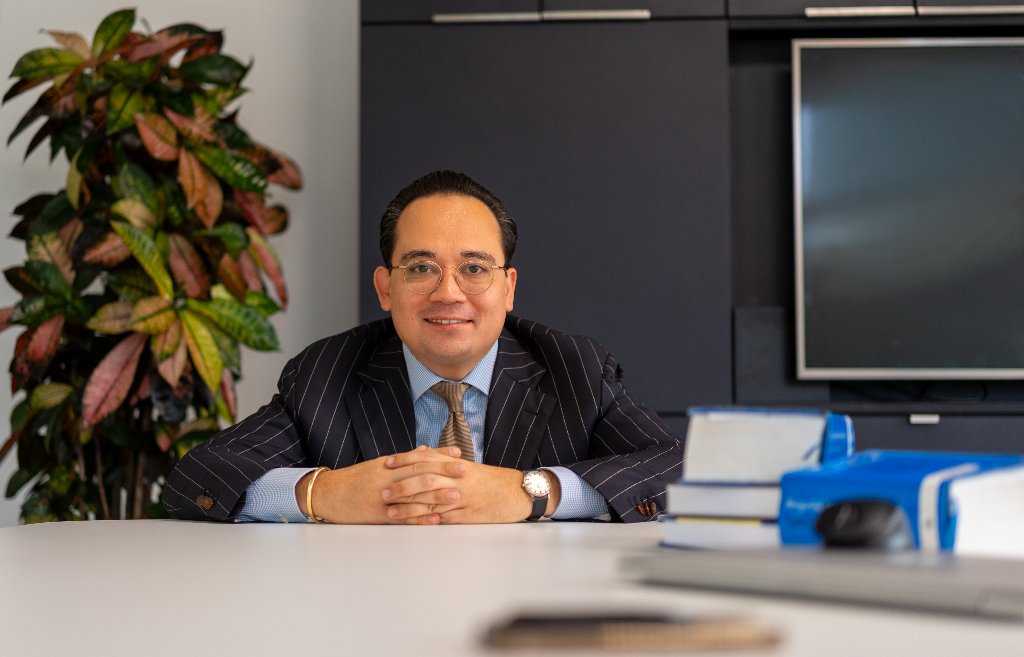
Mr. Vincent Besters represented Royal Coffee & Tea Innovations B.V. in a dispute over a variable management fee
In November 2021, the Amsterdam Court of Appeal issued a judgment in appeal proceedings concerning the performance of a management agreement. Mr. V.M. Besters acted as counsel for Royal Coffee & Tea Innovations B.V. (RCTI), an Alkmaar-based company producing and selling tea and coffee sticks. The opposing party, Venezia Trading B.V., claimed payment of a variable management fee based on the annual results achieved.
What was the case about?
On 31 December 2013, RCTI, San Marco Commerce B.V. (shareholder of Venezia) and Venezia entered into a tripartite agreement. San Marco provided a loan of € 50,000 to RCTI. As part of that arrangement, Venezia acquired one hundred shares in RCTI's capital — and a management agreement was concluded.
That agreement entitled Venezia to a variable management fee of 10% of the net annual result after tax, with a maximum of € 10,000 per year. The agreement ran for as long as Venezia remained a shareholder of RCTI.
After RCTI repaid the loan and Venezia transferred its shares (March 2019), Venezia claimed payment of the accumulated management fee for the years 2014 to 2017. At first instance the claim was rejected because the subdistrict court held that the parties had not reached agreement on a buy-out amount. In appeal, Venezia amended its claim: it now sought performance of the original management agreement for an amount of € 15,111.60 excluding VAT.
RCTI's defences (Mr. Besters)
Mr. Besters raised several defences on behalf of RCTI:
- Nullity due to the prohibition on fiduciary transfers (Art. 3:84(3) DCC). RCTI argued that the share transfer and the associated management agreement were contrary to the prohibition on fiduciary transfers.
- Waiver of rights. RCTI contended that Venezia had waived its entitlement to the variable fee, or alternatively that the parties had agreed on a different buy-out arrangement.
- Annual accounts do not give a representative picture. RCTI disputed that the figures in the filed annual accounts reflected the actual results achieved, and therefore formed the basis for the fee.
- Application of the contractual cap. The fee should be capped at the contractual maximum of € 10,000 per year.
What did the court decide?
The court largely upheld Venezia's primary claim, subject to application of the contractual cap:
- No nullity due to the prohibition on fiduciary transfers. The management agreement was not the legal basis for the share transfer; Article 3:84(3) DCC therefore did not apply to the agreement itself.
- No waiver of rights. The (disputed) minutes of the shareholders' meeting did not unambiguously demonstrate that Venezia had waived its rights under the management agreement.
- Annual accounts are the binding starting point. The court held that the figures in the filed annual accounts served as the basis for calculating the variable fee. The argument that those figures did not give a representative picture is for the account and risk of the company that had the annual accounts prepared and filed.
- Ex officio application of the cap. The court applied the agreed maximum of € 10,000 per year of its own motion, resulting in a lower amount being awarded than the primary claim.
What does this mean for entrepreneurs?
- Management agreements with variable fees are enforceable. Even if the relationship ends without an explicit settlement, the entitlement to the variable fee in principle remains.
- Filed annual accounts are binding on you. The figures in your annual accounts filed with the Chamber of Commerce can be used by the court as binding evidence — even if you later consider that those figures do not give an accurate picture.
- Waiver of rights must be unambiguous. Minutes of a shareholders' meeting do not constitute proof of a waiver of rights if the wording allows multiple interpretations or if two versions of the minutes exist.
- Always check the contractual caps. A cap in a management agreement will be applied by the court where necessary, even if neither party explicitly invokes it.
Case Reference
This post is based on ECLI:NL:GHAMS:2021:3592.
Mr. V.M. Besters acted as counsel for respondent Royal Coffee & Tea Innovations B.V. in this case.
Do you have legal questions following this ruling?
Mr. Vincent Besters is happy to help. Contact us for a no-obligation first consultation.
Get in touch →